





A shared scooter costs nothing as long as you don't use it. That's the whole sales pitch — and precisely why it's so hard to see when you're losing out on it. For anyone who grabs a shared scooter a few times a month, buying one makes no sense. For anyone who commutes to work with it daily, the break-even point is reached after roughly six to fourteen months. This article covers the math, plus a status update on what's actually still operating in the Netherlands.
Last updated: July 2026. Rates from sharing providers are indicative, vary by city, and change regularly. Check the current price in the provider's app.
First, a correction to what most articles still say
The Dutch shared scooter market looks different in 2026 than it did a few years ago. Anyone reading old comparisons will be presented with providers that no longer operate here.
- GO Sharing no longer operates in the Netherlands. Parent company GreenMo went bankrupt in early 2023, after which BinBin took over the assets. Its definitive exit from the Dutch market followed in early 2025. If you still come across the name in a comparison, you're reading outdated information.
- Check is currently the largest, active in roughly eighteen cities and one of the few providers operating profitably.
- Felyx has shrunk in recent years and pulled out of a number of the cities where it once operated.
- Lime only operates shared bikes in the Netherlands, no scooters and no e-steps.
In total there are about 8,800 shared scooters in the Netherlands, spread across roughly 140 municipalities. That sounds like a lot, but in practice it means the supply per city is thin and drops off quickly outside the Randstad.
What about shared e-steps?
Those are virtually nonexistent in the Netherlands. Amsterdam, The Hague, and Utrecht have actively opposed shared e-steps; Utrecht doesn't even have shared scooters. The Dutch debate about shared micromobility is one about abandoned vehicles cluttering the sidewalk, and municipalities have little patience for it.
Practical consequence: in most Dutch cities, "just renting an e-step" isn't an option. If you want to ride an e-step, you buy one. That makes the comparison in this article one between your own e-step and a shared scooter, not between two types of e-steps.
What a shared scooter costs
The rate structure is nearly identical across all providers: a starting fee to unlock, then a price per minute, and a lower pause rate if you lock it temporarily.
| Component | Indicative rate |
|---|---|
| Unlocking | from approx. €0.75 |
| Riding | from approx. €0.35 per minute |
| Pausing | from approx. €0.15 per minute |
Sounds reasonable. Work it out for a fifteen-minute ride and you're already at about six euros one way. That's the core of the sharing model: per minute it feels small, per ride it isn't.
The math for a commuter
Take someone who travels to and from work four days a week: twenty rides per month averaging fifteen minutes.
| Shared scooter | Own e-step | |
|---|---|---|
| Per month | approx. €105 – €125 | approx. €45 – €55 (incl. depreciation) |
| Per year | approx. €1,260 – €1,500 | approx. €530 – €660 |
| One-time investment | €0 | from €1,900 |
Based on those numbers, you'll have recouped the purchase of an e-step in roughly six to fourteen months, depending on how expensive your city is and exactly how much you ride. After that, the gap grows every year, because the shared scooter keeps costing what it costs per ride.
The full breakdown of the e-step side of this table is in what does an e-step cost per year.
Where the break-even point lies
Roughly speaking, with an average ride of fifteen minutes:
- Up to about 4 rides per month: sharing wins easily. You pay under thirty euros a month and have zero hassle.
- Around 8 to 10 rides per month: the tipping point. Sharing then costs roughly the same as the monthly cost of ownership, and the choice becomes a matter of convenience versus availability.
- From about 15 rides per month: ownership clearly wins, and the gap widens quickly.
Watch out for the pitfall in your own estimate: people structurally underestimate how many rides they take, because they only think of the planned rides and not the spontaneous ones.
Cost isn't the whole story
Where the shared scooter is truly better
- One-way trips. Going somewhere you won't be returning from — to a party, then home by train. Your own vehicle always has to come back with you.
- No storage needed. If you live on the fourth floor with no elevator or storage room, that's a real argument.
- Nothing to maintain, nothing to charge, nothing to lose. Broken battery, flat tire, theft: not your problem.
- Two helmets under the seat. With shared scooters, a helmet is usually mandatory and provided.
Where your own e-step wins
- It's always there. In practice, this is the deciding factor. A shared scooter that isn't there at eight in the morning costs you your train.
- It travels with you. You can take an e-step on the train as hand luggage — a shared scooter stays behind at the edge of the zone. See taking an e-step on the train, tram, and metro.
- No zone boundaries. Shared vehicles operate within a service area. Outside it, you can't park or end your ride. Your own e-step goes wherever you go.
- Bike path instead of roadway. An e-step in the special moped category is capped at 25 km/h and belongs on the bike path. Shared scooters are usually mopeds that, in cities like Amsterdam, must use the roadway, among car traffic.
- Tax deductible. Your employer can reimburse €0.25 per business kilometer tax-free — even for an e-step. For shared rides, that's messier. See e-step as a company vehicle.
The hybrid approach most people end up choosing
In practice, this isn't an either-or question. Anyone with their own e-step simply keeps the sharing app on their phone for the rides the e-step can't handle: with two people, in pouring rain, or one-way traffic late at night. That costs ten to twenty euros a month and covers exactly the gaps.
So the comparison that matters isn't "sharing or owning," but: which part of my rides is predictable and daily? That's the part you want to own. You rent the rest.
Frequently asked questions
Do I need a driver's license for a shared scooter?
Yes. A moped requires at least an AM driver's license, and providers check this at registration. An e-step in the special moped category has no license requirement — but there is a minimum age of 16. All the rules are listed in electric scooter rules 2026.
Is a helmet mandatory?
Almost always with shared scooters, both legally and under the provider's terms. On an e-step in this category, a helmet isn't mandatory, but it is wise.
What if I cause damage with a shared scooter?
Virtually all providers apply a deductible that can run into the hundreds of euros per claim. Read that part of the terms before you ride — it's the item people are most often caught off guard by.
Are there still cities where you can rent an e-step?
The supply is minimal and changes quickly. Don't count on it as a transport plan. If you want to ride an e-step regularly, buying one in the Netherlands is practically the only route — and it needs to be an RDW-approved model.
Do I lose a lot of money if I stop after a year anyway?
An e-step with a valid registration retains decent resale value, precisely because otherwise a buyer would have to arrange an expensive individual RDW assessment themselves. Expect to get back part of your purchase price, not all of it.
Conclusion
Under five rides per month: keep sharing. Above fifteen: buy one, and you'll have recouped it within a year. If you're in between, don't let price be the deciding factor — it's roughly equal. Instead, look at the question that really matters during the morning rush: is a vehicle there, or not?
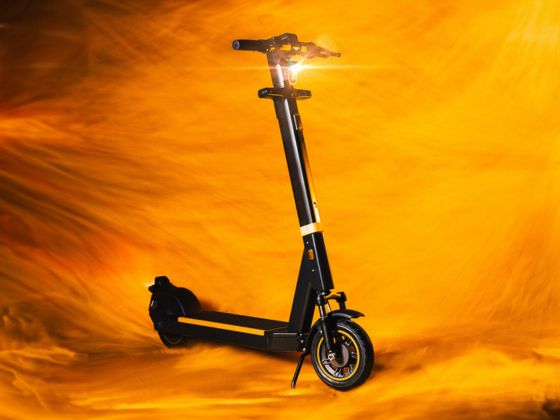
Check out the SELANA Alpha or plan a test ride to feel whether it suits your commute.
Practical: e-stepping in daily life
- What does an e-step cost per year? The complete breakdown
- E-step as an alternative to the mobility scooter
- E-step and alcohol: what's the legal limit?
- Taking your Dutch e-step abroad
- Taking an e-step on the train, tram, and metro
More on the rules: electric scooter rules 2026, all RDW-approved models, and buying a legal e-step.


